Introduction: Why Should Citizens Study Geopolitics?

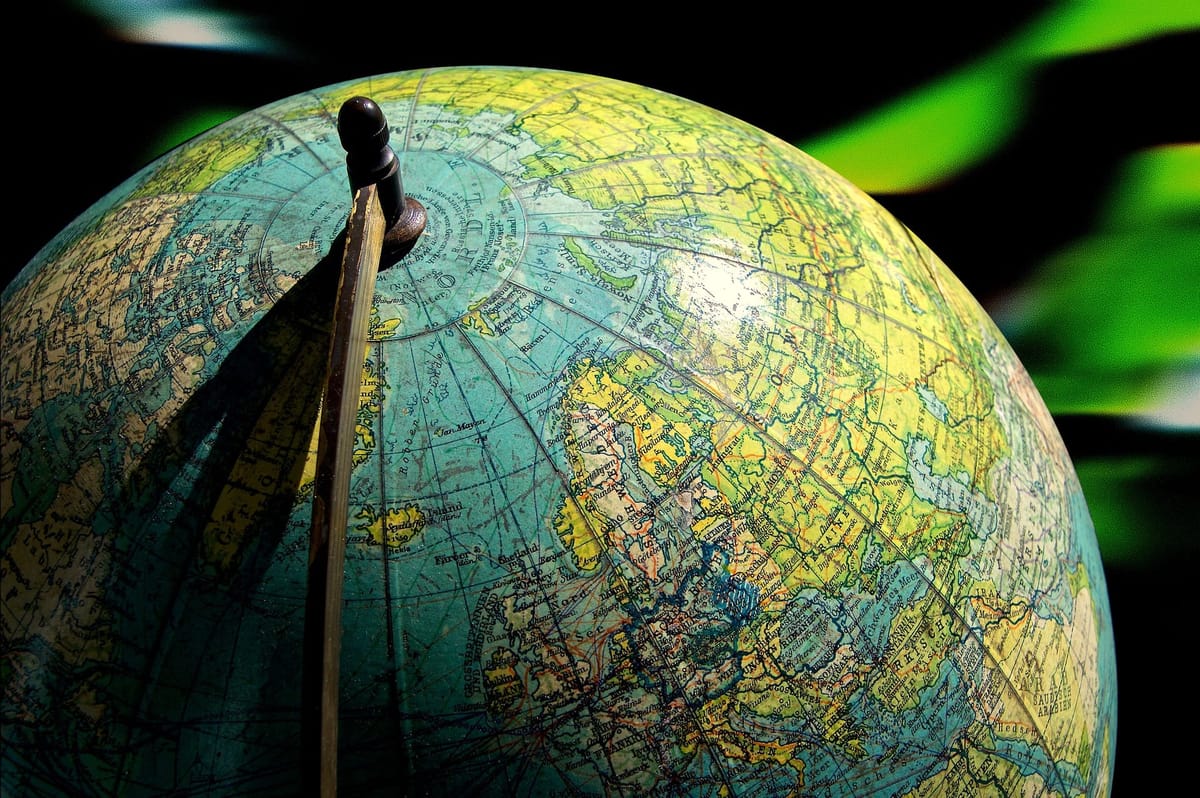
If you were to watch the news, or hop on to any social media platform these past few decades, you’d see the myriad of public commentary concerning political events. Newscasters earnestly interviewing senators, retired military officers, and foreign relations experts of all stripes; yet, you would probably walk away more perplexed than before. The temptation to receive or come up with a comforting narrative would then present itself. Those narratives may have you conclude, “This is all about colonialism and securing resources.” Or, “This is another piece of evidence for the existence of a global cabal of elites.” In a republic like our own, citizens are often called upon to form judgments about events far beyond their immediate experience. Questions of war, alliances, trade, and international rivalry regularly shape public debate and national policy. Yet for most people, these matters appear only as fragments of news—headlines that describe crises without explaining the deeper forces behind them.
However, the study of geopolitics offers a way to see those forces more clearly. By examining how geography, power, and political interests interact, geopolitics seeks to understand the patterns that shape relations between states. It assists the common citizen to attain the virtue of wisdom by asking enduring questions: Why do great powers compete? Why do wars occur? How does geography influence the rise and fall of nations?
For the average citizen, studying geopolitics provides a perspective that moves beyond the rapid cycle of daily media consumption. It helps place contemporary events within the broader currents of history.
The Study of Power and Geography
At its core, geopolitics is the study of how political power operates within the physical landscape of the world. Mountains, oceans, trade routes, and strategic territories have always shaped the possibilities available to nations. Geography does not determine history, but it strongly influences the strategic choices available to states. For example, how would a major river between states serve as a point of friction for trade and industrial development rights? Or, how does the Northern European plain inform the frequency of warfare on the continent?
Throughout history, political leaders and strategists have had to consider these realities. The location of a nation, the resources it controls, and the surrounding powers it must contend with all shape its political decisions. Understanding these constraints helps explain why states behave as they do in the international arena. Geopolitics, therefore, seeks to illuminate the strategic environment in which nations operate. It examines not only the ambitions of states, but also the geographical and political conditions that shape those ambitions.
The Classical Tradition of Strategic Thought
The attempt to understand these patterns is not new. For more than two millennia, historians, philosophers, and military thinkers have reflected on the dynamics of power among states. One of the earliest and most influential observers of these dynamics was the Greek historian Thucydides. Famously writing The History of the Peloponnesian War in the fifth century BC, he examined the rivalry between Athens and Sparta and the complex forces that drove the conflict between them. In one of the most famous passages of his work, he observed the stark realities that often govern relations between powerful and weak states, “The strong do what they can and the weak suffer what they must.” Thucydides’ analysis was not merely a description of a particular war. It was a brutally honest attempt to understand the enduring forces that shape conflict between rising and established powers.
Later thinkers continued this tradition of reflection on strategy and statecraft. Sun Tzu examined the principles of warfare and the importance of strategic judgment. Teaching strategy through lyrical proverbs in his classic The Art of War. Niccolò Machiavelli explored the realities of political leadership and the preservation of states. In his infamous book, The Prince, he observed that it was the nature of the state to secure its own survival, rather than be a bastion of virtue. Centuries later, the Prussian strategist Carl von Clausewitz famously wrote in his tome On War, “War is merely the continuation of politics by other means.” Taking in all of these short observations together, one can see these thinkers sought to understand the relationship between power, strategy, and political order.
Patterns in International Politics
It is in the view of the author of this journal that history does not repeat, it rhymes. Although the circumstances of history change (new technologies discovered, political philosophies develop, demographics and cultural shifts occur); many of the fundamental dilemmas faced by states remain remarkably consistent. Nations seek security in a world where no overarching authority can enforce order or the balance of power among them. In other words, in the state of nature international relations among states are anarchic. Rivalries emerge when rising powers challenge established ones. Strategic geography continues to influence trade, military planning, and political alliances. Not one historical event is exactly identical to the next… However, the conditions which move the forces of politics often leave identifiable patterns in their wake.
By studying the reflections of earlier thinkers, readers begin to recognize patterns that appear again and again in international affairs. Conflicts that seem sudden, inexplicable, or contradictory to the promises of elected officials often come to new light when viewed through the lens of historical experience. This informed perspective does not eliminate the complexity of world politics, but it provides a framework for understanding it.
Why This Matters for Citizens
For the citizen who has the right to exercise self-governance, such understanding is not merely academic. Critical decisions about war, diplomacy, and national security ultimately shape the future of a nation. Public debate about these matters benefits when citizens possess a deeper awareness of the strategic realities that influence political decision-making. It is a key component of maintaining the health of our republic.
The study of geopolitics does not require becoming a professional strategist or policy expert. Neither does it give one the license to be an obnoxiously opinionated armchair historian. Rather, it invites readers to cultivate a broader perspective on the forces that shape world affairs. By engaging with the classic works of strategic thought, citizens gain access to a long tradition of reflection on power, geography, and international order.
The Purpose of this Journal
The Gládio Review was founded with this purpose in mind. Instead of focusing primarily on the rapid cycle of breaking news commentary or keeping up with the ever shifting political intrigue of world powers, the journal seeks to revisit the foundational texts that have shaped how scholars and statesmen understand geopolitics. Through essays examining these classic works, the publication aims to illuminate the enduring principles of strategy and statecraft that continue to influence international politics today.
In an age when information is abundant but historical perspective is often scarce, returning to the great works of geopolitical thought offers an opportunity to reflect more carefully on the forces that shape the modern world.
Further Reading
Readers interested in exploring these ideas further may wish to begin with the following works:
- The History of the Peloponnesian War — Thucydides
- The Art of War — Sun Tzu
- The Prince — Niccolò Machiavelli
- On War — Carl von Clausewitz